A sudden airspace closure. Flights diverted across neighboring regions. Airports receiving aircraft they never expected.
Geopolitical shifts can completely upend regional and global travel and security landscapes overnight. A sudden closure of airspace, urgent rerouting of passenger aircraft or surge in unexpected arrivals result in chaos and significant border security risks if not managed strategically.
For border authorities responsible for managing traveler flows while maintaining national security, the ability to respond effectively to disruption is critical.
As global mobility continues to grow, borders are operating in an environment that is becoming more complex and unpredictable. Managing a crisis at the border today goes beyond emergency response. Authorities need to pre-empt the changes, evolving from a reactive to proactive approach. This allows them to maintain control, collaborate across border agencies, and adapt operations as situations evolve.
Key Takeaways: Crisis Management at the Border
Effective border crisis management depends on three core capabilities:
- Early risk detection through multiple real-time data sources such as API-PNR, and eVisa/eTA systems used in modern digital border management
- Operational awareness that allows authorities to adapt quickly to disruptions in passenger flows
- Coordinated decision-making across border agencies, airlines, and security stakeholders
When these elements are in place, governments can respond to unexpected events while maintaining both security and smooth traveler movement.
When Disruptions Reach the Border
Borders sit at the intersection of security, aviation, migration, and economic drivers like tourism. When disruptions occur elsewhere in the travel ecosystem, their effects are often felt first at border control points.
Regional tensions, for example, may force airlines to reroute flights with little warning, shifting passenger flows between airports. Public health events can introduce new screening requirements, while migration pressures may rapidly increase traveler volumes at certain entry points.
In these situations, border authorities must quickly understand what is happening, identify potential risks, and adjust their operations accordingly. This must be done while still allowing legitimate travelers to move through the system.
Traditional border processes tend to focus on checks that occur only once a traveler arrives at immigration control. This approach is barely effective under normal circumstances, and crumbles instantly when disruptions occur.
Moving Decision-Making Earlier in the Journey
To strengthen resilience, many governments are shifting toward risk-based border management, allowing authorities to assess travelers earlier in the travel process.
Systems such as Advance Passenger Information (API), Passenger Name Record (PNR), and electronic Travel Authorization or eVisa provide governments with visibility into traveler data before departure. This upstream approach allows authorities to analyze risks, investigate alerts, and prepare operational responses in advance.
Early screening enables authorities to prevent boarding at port of origin or flag travelers for further checks upon arrival—reducing pressure on frontline border officers and strengthening national security.
Technology Enabling Operational Awareness
Digital border platforms play a central role in enabling effective crisis management. Travizory’s integrated API-PNR intelligence platform and eVisa / eTA systems allow authorities to analyze traveler data before departure, while biometric identity verification and automated risk analysis provide border agencies with a clearer picture of the traveler journey. These connected systems give governments the operational visibility needed to adapt quickly when disruptions occur.
During disruptions, this visibility allows governments to quickly understand passenger flows, identify risks, and adapt border operations accordingly.
Automation and AI-driven risk analysis also helps maintain efficiency. By facilitating low-risk travelers, border authorities can focus attention and resources on cases requiring deeper inspection. This balance between security and facilitation becomes particularly important during periods of operational pressure.
A Practical Example of Border Resilience
A recent example from Seychelles shows how digital border systems can support rapid responses to emerging public health risks. Following reports of increasing Mpox cases globally, the Public Health Authority introduced additional monitoring measures at the border using Travizory’s Seychelles Electronic Border System (SEBS).
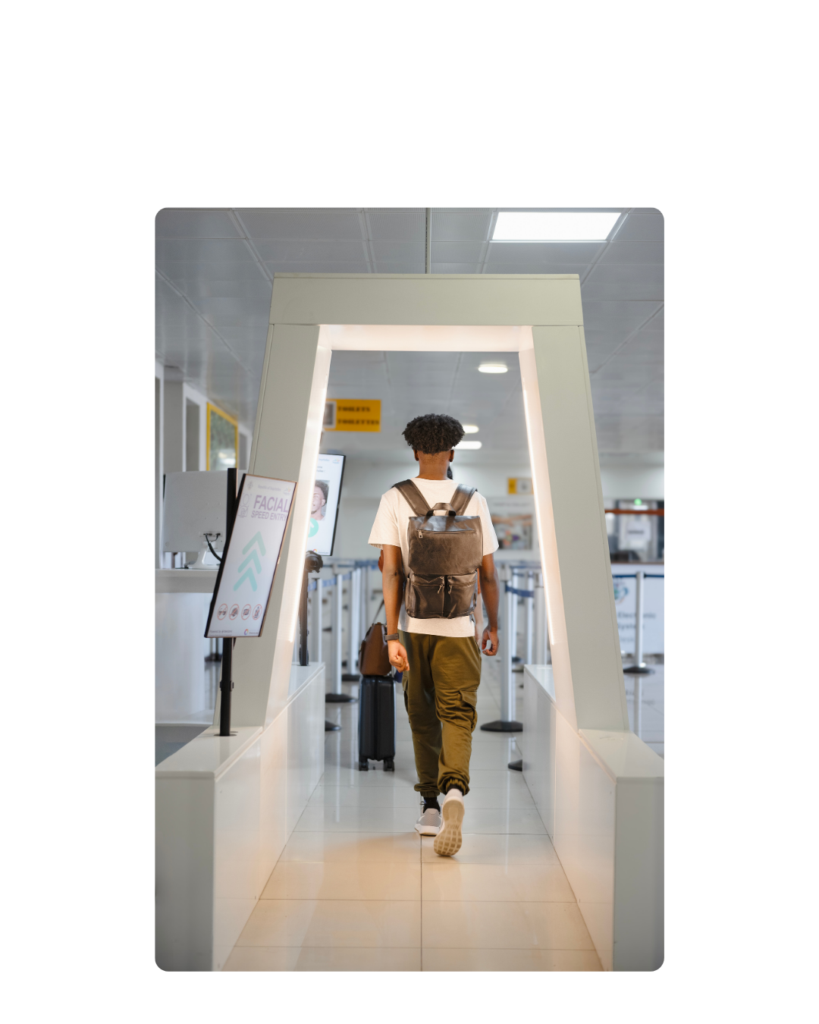
Thermal cameras were activated to automatically identify travelers with elevated body temperatures, directing them to the Public Health desk in the arrivals hall for further screening. At the same time, SEBS applies enhanced risk-detection logic to identify travelers arriving from higher-risk regions as they pass through the biometric corridor.
By combining biometric identity verification, traveler data, and automated screening, authorities are able to detect potential risks earlier while minimizing disruption for the majority of travelers—demonstrating how digital border systems can support both public health protection and efficient border operations.
Preparing Borders for an Uncertain Future
As global mobility becomes more interconnected, disruptions will remain an unavoidable reality. The challenge for governments is not simply reacting to crises, but building border systems capable of adapting to them.
Modern border management, therefore, relies on early risk assessment, integrated data systems, and digital identity technologies that allow authorities to detect risks earlier and coordinate responses more effectively.
At Travizory, we support governments in building secure, intelligence-led digital borders through integrated solutions connecting eVisa/eTA platforms, API-PNR systems, and biometric technologies. By enabling earlier decision-making and stronger operational visibility, these systems help authorities respond to disruptions while maintaining secure and seamless travel.
In an increasingly complex travel environment, the strongest border systems are those that can anticipate disruption and adapt before problems reach the checkpoint.
BLOGS
Latest articles